

Navigating the Complexity of Obedience
Why children can (and should) question instructions


This week, I explored the topic of obedience with my eldest daughter using the "Sácame de la caja" card: "Consequences of (not) obeying your parents and teachers." What began as a conversation about obeying authority figures turned into a valuable lesson about questioning and reflecting rather than blindly following orders.
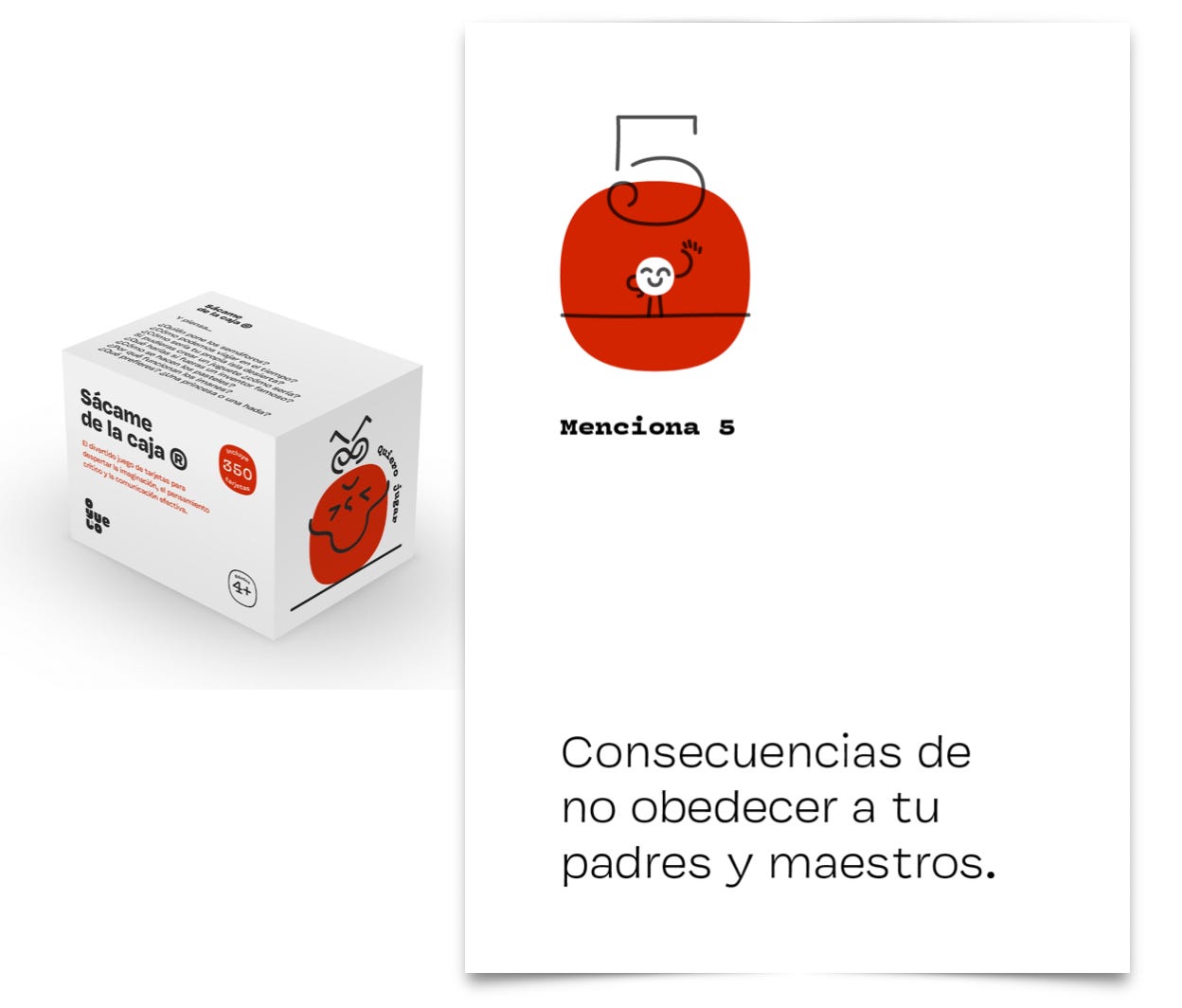
Initially, my daughter's response was emphatic: "Yes, I should obey my parents and teachers." However, we delved deeper into her understanding, exploring the possibility that an authority figure might ask her to do something she considered wrong. This led us to reflect on who represents an authority, concluding that it is someone who leads or exercises control in any given situation.
With this clearer understanding, we returned to the idea of whether we should obey even when we believe it is wrong to follow the instruction. We discussed the importance of being critical when following orders, highlighting the danger of blind obedience, which is essentially when individuals do as they are told, regardless of what they believe is ethically, morally, or legally correct.
We explored scenarios where a friend could give instructions that, for example, would affect another peer, and my daughter had to weigh the possible consequences of following those orders. Additionally, we emphasized the need to confide in a trusted adult if any authority figure asked her to do something that made her feel uncomfortable.
The next day, the conversation took a somewhat expected turn when my daughter questioned a routine instruction: "Go brush your teeth." She argued, cleverly, "You told me to question orders." This sparked another conversation about discerning which orders should be questioned. My argument was that instructions that threatened her physical or emotional integrity or that of someone else were the ones that should be questioned.
The following day, acknowledging my mistake for not allowing her to question the teeth-brushing instruction, I realized the need to question any type of instruction and never avoid potential conversations or reflection. I seized the moment to emphasize the importance of self-care for present and future well-being.
The following day, acknowledging my mistake for not allowing her to question the teeth-brushing instruction, I realized the need to question any type of instruction and never avoid potential conversations or reflection.
Although my daughter was attempting to use questioning to avoid a mundane task, the deeper lesson was the importance of questioning and not automatically obeying. It reminded me that, as parents, fostering critical thinking is crucial, even when it means our children question our own instructions.
This experience reaffirmed that encouraging children to question not only promotes independence but also builds the groundwork for more thoughtful and informed decisions in the future. Conscientious obedience, guided by reasoning, is the true key to healthy development.
Lovely story